 English


01
Apr 24.2026
What is the Green Airport Solution?
05
Mar 17.2026
What is a Ground Power Unit?

Mar 17-2026
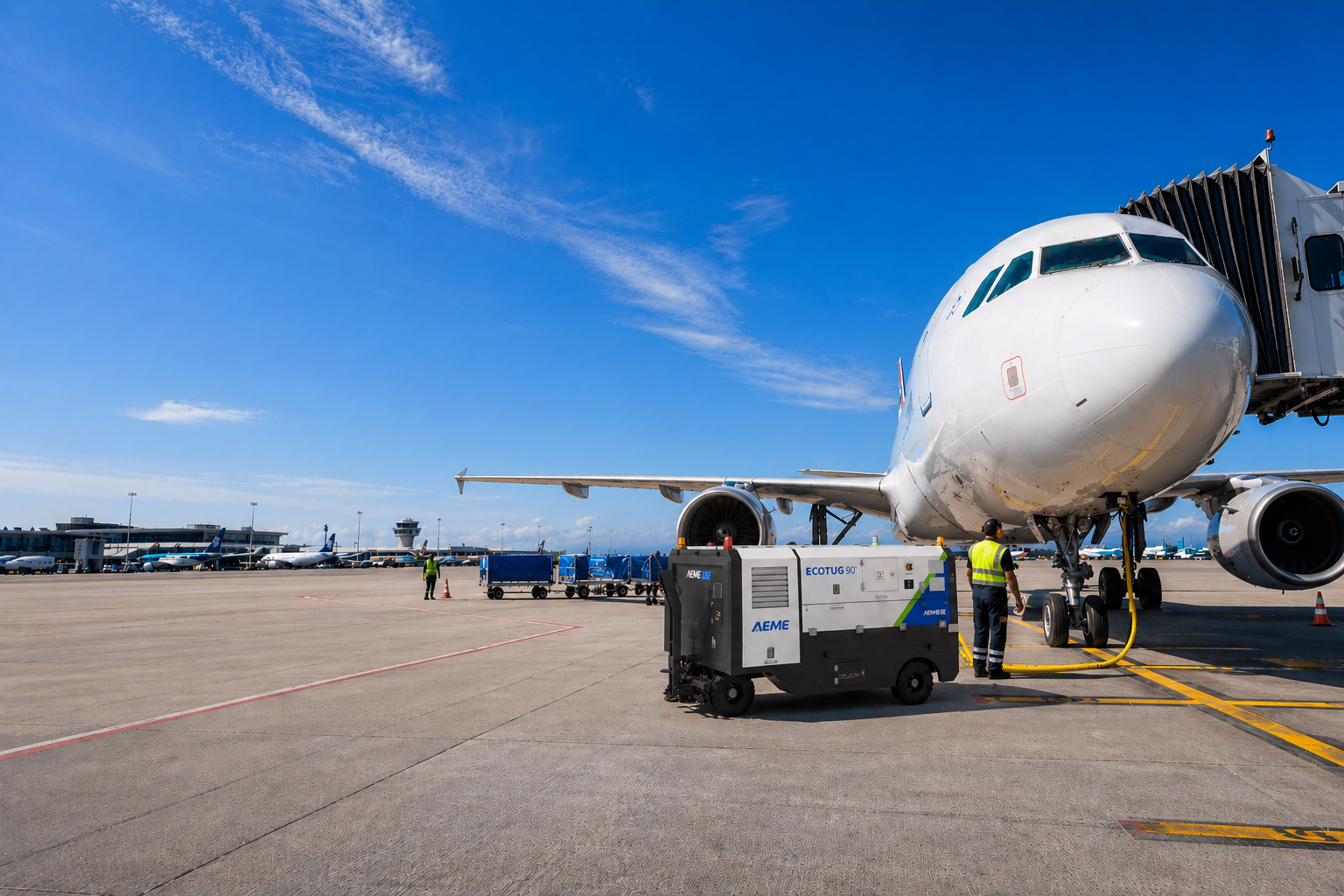
When an aircraft is on stand, the engines are normally shut down. However, the aircraft still needs power. Air conditioning, cabin lighting, avionics, and other systems must remain on for maintenance, checks, or pre-flight preparations. At this point, the Auxiliary Power Unit (APU) can provide power for these ground operations. But the APU runs on jet fuel, producing emissions and a continuous hum. This is where the Ground Power Unit (GPU) comes in.
Besides providing power, the GPU saves fuel and keeps noise and emissions down. This is especially true today as airports face the transition to electrification, where all-electric GPUs are gradually becoming the preferred choice in this field.
A GPU is an external power source for the aircraft while it's on the ground. At airports, the GPUs are usually positioned at stands or gates and connect to the aircraft by cable. Once connected, they take the job of supplying power so the aircraft doesn't have to run on its own systems.
Ensure reliable power
Reduce fuel consumption
Cut fuel costs
Lower noise levels
Lower emissions
Reduce operating costs
Reduce maintenance requirements
Support the transition to net zero
When parked with its engines off, the aircraft will usually run its Auxiliary Power Unit (APU) to provide power, but it burns fuel and produces emissions. Using a GPU avoids that. It cuts fuel use straight away, and with it, carbon emissions. It also brings noise levels down, which makes a difference during night operations and at busy airports. For ground crews, it's a more comfortable working environment as well.
GPUs can provide steady, consistent power, which is exactly what onboard systems need.
Running an APU or a diesel unit adds up over time. Grid-powered or battery GPUs are more economical to run, and they require less maintenance in the long term.
Ground Power Unit (GPU) power output
Aircraft systems are sensitive to power quality. System controls, maintenance, none of these can deal with unstable power supply.
GPUs are built to match aircraft requirements exactly. In practice, an aircraft GPU usually provides:
400 Hz 115V for most aircraft
28.5V DC for smaller aircraft, jets, helicopters.
The GPU has to deliver the right voltage and frequency, consistently, without fluctuation.
Where the power comes from
Not all GPUs work the same way. The main difference is how the power is sourced:
Diesel GPUs
Diesel-powered options.
Solid-state GPUs
These take power from the airport grid and convert it. Standard 50 or 60 Hz electricity is turned into 400 Hz, with the correct 115 V for the aircraft. No engine involved, so less noise and less maintenance.
Battery GPUs
These combine high-capacity battery pack with converters. They're typically mobile, quiet, and produce zero-emissions during use. With more airports pushing electrification, battery GPU is getting a lot more attention.
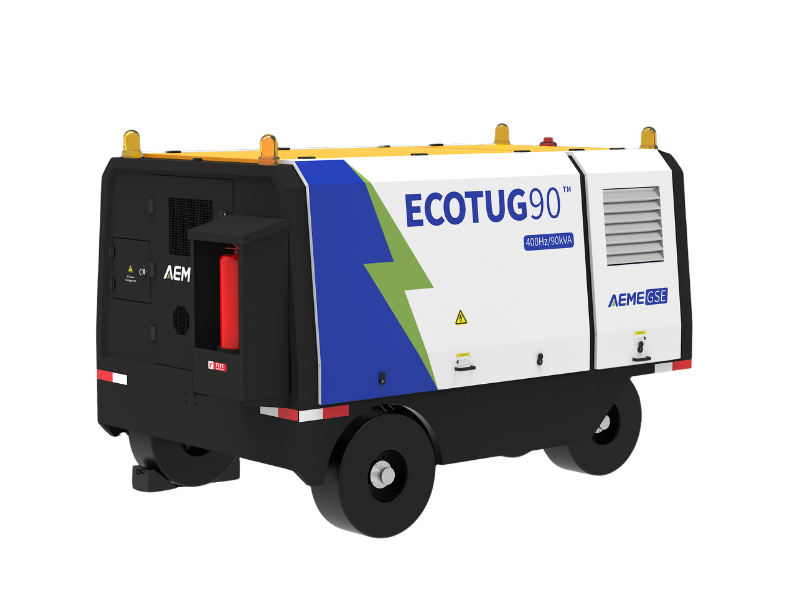
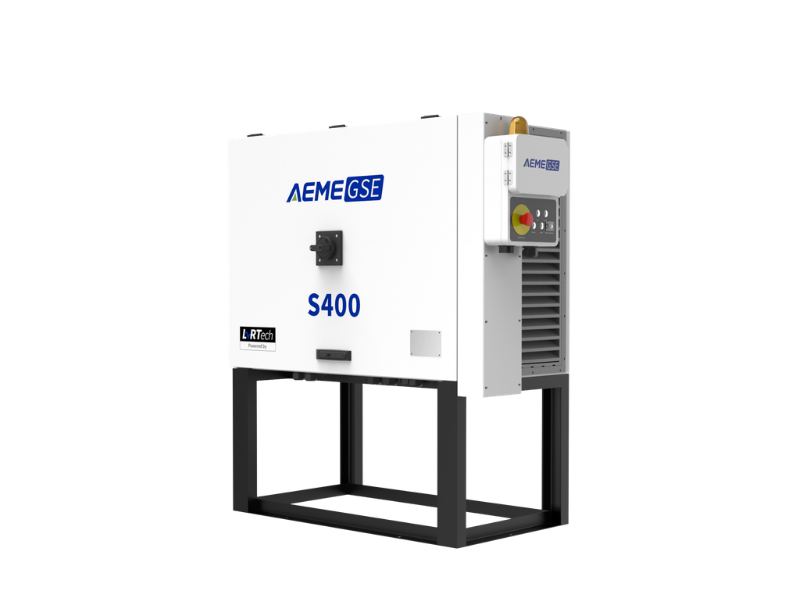
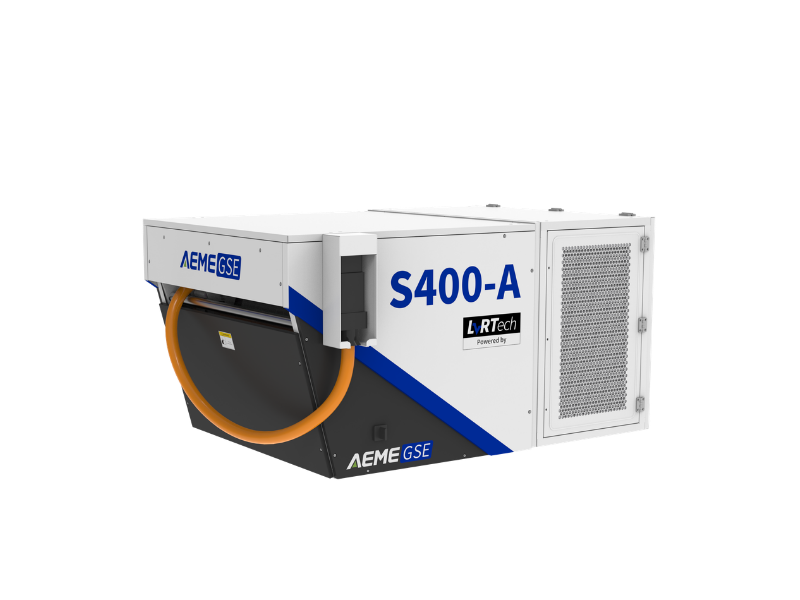
p1: ECOTUG 90 Battery Ground Power Unit p2: S400-M Mobile Solid-State Ground Power Unit p3: S400-V Solid-State Ground Power Unit p4: S400-A Bridge-Mounted GPU
You'll generally see three types of GPUs, depending on how the airport is configured:
Fixed units
Installed at gates or in hangars. Always in place, ready to connect.
Mobile units
Mounted on a towable trailer. They can be moved between stands and are useful for remote positions.
Bridge-mounted units
Built into the passenger boarding bridge. When the aircraft parks at the gate, power is already right there.
Whether you need a 400 Hz solid-state GPU, a battery GPU, or a mobile or stationary solution, AEME GSE offers flexible options.
Our products combine advanced technology with proven reliability in real airport operations. We have delivered solutions to major international airports and airlines worldwide.
We provide reliable ground power solutions that reduce emissions, improve efficiency, and support more sustainable ground handling.
S Power series provides 400 Hz AC or 28 V DC output for different aircraft types.
LVRTech™ low-voltage-ride-through technology ensures stable output and protects onboard systems.
Available in bridge-mounted, mobile, and fixed configurations.
A towing and mobile battery-powered GPU.
Enables flexible deployment of GPUs across different stands.
Supports low-emission, low-noise airport operations.
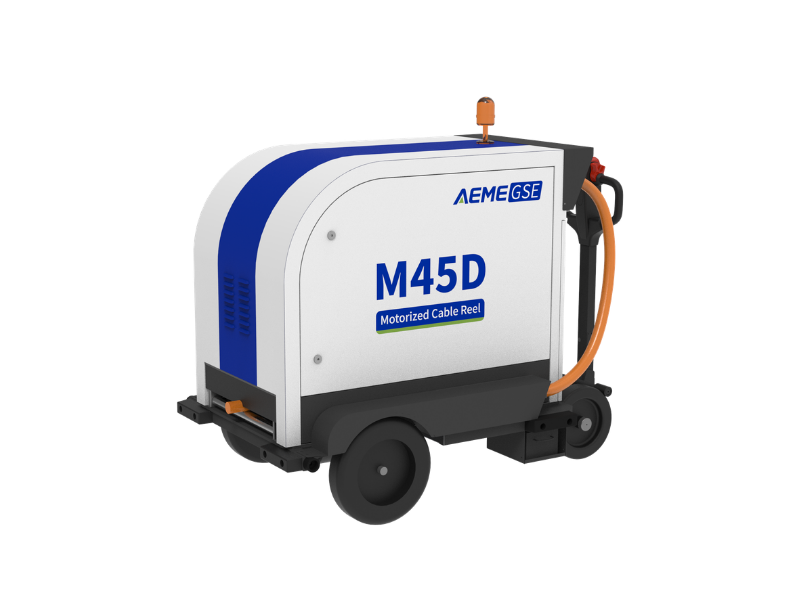
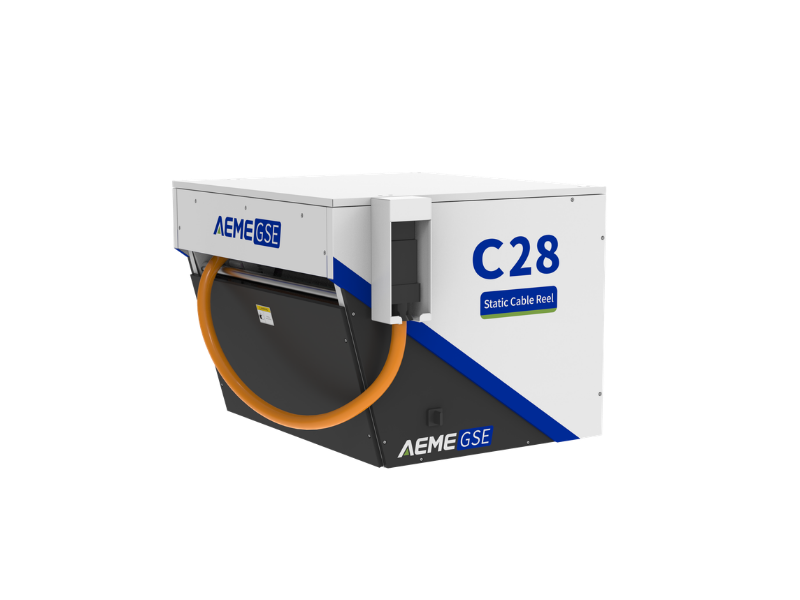
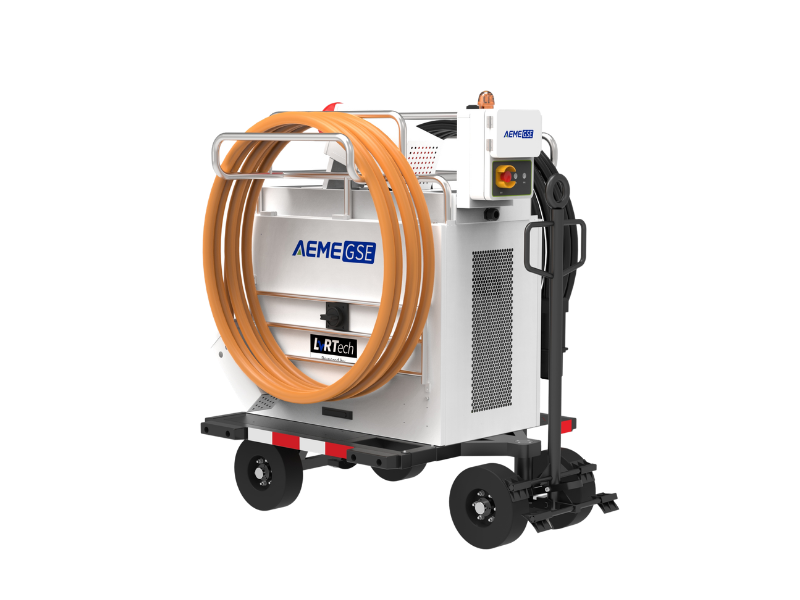
L: M45D Motorized Cable Reel R: C28 Cable Reel
M45D Motorized Cable Reel/C28 Cable Reel
A 400 Hz cable management system for ground power operations.
Reduces manual handling and protects cables from wear.
Improves efficiency, safety, and lowers maintenance needs.
Green Airport Solution
An integrated solution for energy-efficient airport electrification.
Combines PV, battery energy storage systems(BESS), charging systems, and full electric GPUs.
Addresses power limits, high costs, and electrification challenges.

AEME GSE Green Airport Solution: Solar-PV-Battery Energy Storage System-eGSE
The aviation industry is working toward net zero, so airports and airlines are moving to cleaner ground operations. This is speeding up the shift to electric Ground Support Equipment(eGSE).
Replacing onboard APUs with ground power is making a difference. It cuts fuel use, emissions, and noise on the apron.
What comes next is how airports manage energy:
Bringing in solar and other renewables to rely less on utility power or fossil fuels over time.
Smarter energy use
Intelligent systems now manage how energy is produced, stored, and used across the airport, making things more efficient and easier to control.
Ecosystem development
Energy, equipment, and tech are connecting to form a more integrated and sustainable airport system.
Contact AEME GSE now, discover your green energy plan.
More applications of AEME's ground power units and solutions
Get in touch
Professional Ground Support Equipment Supplier
Tel
+86-28-65790186
info@aeme.global
Add
No. 1, Huaming Road, Longtan Industrial Park, Chenghua District, Chengdu, Sichuan, China


No. 1, Huaming Road, Longtan Industrial Park, Chenghua District, Chengdu, Sichuan, China
Products
Quick Links


